Operations Dashboard

Track throughput, cycle time, WIP, and productivity in one operations KPI dashboard

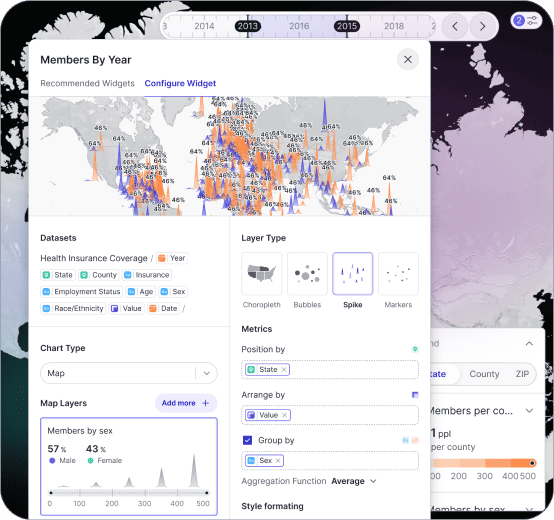
Operations performance doesn’t fail with one big number. It fails in flow: work piles up in one step, cycle time stretches, and the backlog becomes “normal” until customers feel it. Fusedash helps you build an operations dashboard that makes flow visible so teams can spot bottlenecks early, keep work moving, and improve process performance week after week.

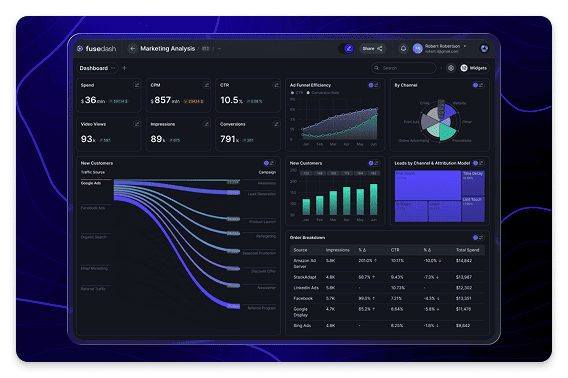
Use it as a throughput dashboard for daily volume and capacity, a cycle time dashboard to reduce delays, and a productivity dashboard that shows whether improvements are real or just shifting work downstream. Build the foundation with dashboard software. Add real-time monitoring for fast-moving bottlenecks.

fusedash/ag.drone
Daily ops review questions

What an operations dashboard should reveal in the first 60 seconds

The goal of an operations KPI dashboard is clarity during daily review. Your team should see where work is stuck, what changed since yesterday, and what lever will improve flow fastest.

Daily ops review questions

What an operations dashboard should reveal in the first 60 seconds

The goal of an operations KPI dashboard is clarity during daily review. Your team should see where work is stuck, what changed since yesterday, and what lever will improve flow fastest.

Where is WIP building, and which step is the constraint today?
Did throughput drop due to volume, staffing, downtime, or rework?
Is cycle time rising across the process or only in one stage?
Which teams or shifts are drifting from baseline performance?
Are we improving flow or just moving delays from one step to another?
What should we do next: rebalance capacity, remove blockers, or change the process?
Dashboard views

The operations views teams actually run every week

Ops teams need stable views that support daily review, bottleneck diagnosis, and improvement tracking without drowning the team in metrics.

Dashboard views

The operations views teams actually run every week

Ops teams need stable views that support daily review, bottleneck diagnosis, and improvement tracking without drowning the team in metrics.

Insights-Driven Platform
Daily Ops Review

Throughput dashboard (flow and volume)

See volume completed, backlog movement, and where work is accumulating so the team can act before delays compound.

Bottleneck Diagnosis

Cycle time dashboard (step-by-step)

Track cycle time across process stages and isolate which step is extending lead time and why.

Efficiency

Productivity dashboard (capacity and output)

Compare output vs capacity by team or shift to understand whether performance changes are staffing, demand, or process-driven.

Improvement Tracking

Continuous improvement dashboard (before vs after)

Track changes to processes and measure whether improvements reduced cycle time, lowered WIP, or increased throughput over time.

Getting Started

How to build an operations dashboard in Fusedash

Start with the flow metrics that explain bottlenecks. Then add drilldowns that match how your team reviews work: by step, team, shift, and work type.

Getting Started

How to build an operations dashboard in Fusedash

Start with the flow metrics that explain bottlenecks. Then add drilldowns that match how your team reviews work: by step, team, shift, and work type.

Insights-Driven Platform
01

Connect work intake and completion data

Import or connect data that reflects your workflow: tickets, tasks, orders, work items, timestamps, and status changes.

02

Define stages so cycle time is comparable

Align the process stages used by teams so cycle time and WIP mean the same thing across the whole operation.

03

Build a daily ops view first

Create one view your team uses every day: throughput, backlog, WIP, and the primary bottleneck indicator.

04

Add drilldowns that point to action

Filters for team, step, shift, work type, and timeframe make it easy to isolate the constraint and assign an owner.

Fusedash Builder

Build operations dashboards teams actually use: flow clarity, drill-downs, and a shared view for daily review and improvement tracking.

Start a free trial

Operations KPIs to track first

Operations dashboards work best when they measure flow, not vanity activity. Start with these KPIs, then break them down by process step, team, and shift to find the real constraint.

Throughput completed per day or shift
Cycle time trend from start to finish
WIP volume and queue time by process step
Rework rate or blocked work trend when available

Choose the right dashboard for your team

Operations and logistics often get mixed together, but the questions are different. Use the dashboard that matches the decisions your team needs to make.

Operations dashboard for throughput, cycle time, WIP, productivity, and bottlenecks
Logistics dashboard for fulfillment, inventory, delivery performance, and SLAs
Use operations views to improve flow inside the process
Use logistics views to monitor execution across warehouses and delivery networks

Bottlenecks you can fix, not just observe

A cycle time dashboard should do more than show a slow trend. It should show where work queues form and what changed so the team can remove the constraint quickly.

Step-level cycle time and queue time to pinpoint the constraint
Breakdown by team and shift to separate demand vs capacity problems
Before-and-after comparisons to validate process changes
A simple view that makes ownership and next action clear

Real-time monitoring for internal operations

When work systems spike, small delays compound into a backlog fast. Real-time monitoring helps ops teams react while the issue is still recoverable.

Throughput drops that signal a process or system constraint
WIP spikes in a single step that predict cycle time increases
Blocked work surges after changes or outages
Backlog growth that needs immediate rebalancing
FAQs Section

Operations dashboard FAQs

Common questions teams ask when building an operations dashboard for internal performance and process improvement.

FAQs Section

Operations dashboard FAQs

Common questions teams ask when building an operations dashboard for internal performance and process improvement.

What is an operations dashboard?

An operations dashboard is a view of internal process performance that tracks flow metrics like throughput, cycle time, WIP, and productivity. It helps teams identify bottlenecks, reduce delays, and improve execution.

What should an operations KPI dashboard include first?

Start with throughput, cycle time, WIP, and backlog movement. Then add step-level breakdowns to identify the constraint and measure improvement.

What is the difference between an operations dashboard and a logistics dashboard?

Operations dashboards focus on internal process flow and productivity. Logistics dashboards focus on fulfillment, inventory, delivery performance, and SLAs.

Can an operations dashboard update in real time?

Yes. Real-time monitoring is useful when throughput drops, WIP spikes, or blocked work surges and teams need to react immediately.

Can we share this dashboard across teams?

Yes. Shared views help teams align on the same definitions and run daily ops reviews with consistent numbers.

Ready to run marketing with a decision-ready dashboard?

Track CAC, ROAS, channel mix, and conversion drivers in one marketing dashboard. Pace budget, measure experiments, and spot shifts early.