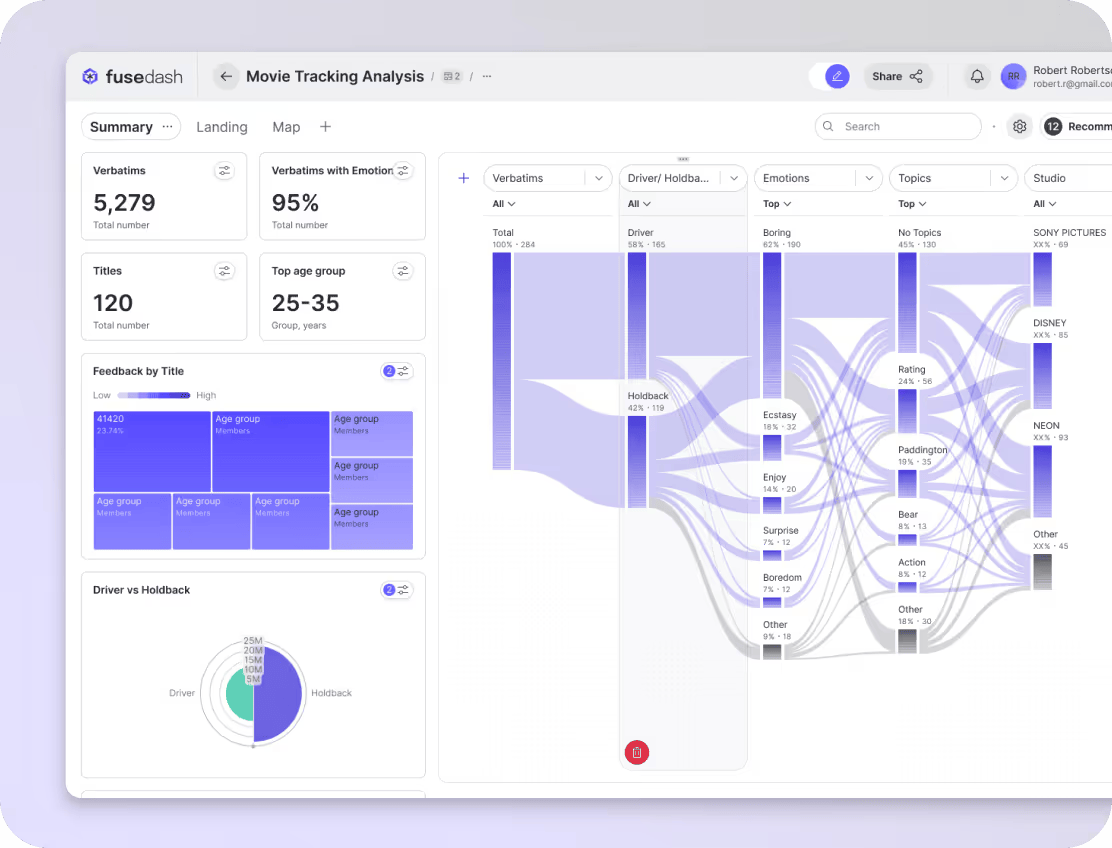
White-label client reporting means delivering dashboards under your agency's branding instead of the platform's. Your client logs into reports.youragency.com, sees your logo on every screen, and never knows which tool you actually use. None of this requires custom development. Three setup approaches cover almost every agency situation, and the choice between them depends on how visible your brand needs to be, how comfortable you are with DNS, and what you are willing to spend over 12 months (not just this month).
Why white-label is more than logo placement
The point of white-label is not that your logo appears on the cover page. The point is that your client never has a reason to wonder who built the dashboard.
Every "powered by" footer, every login page in someone else's color scheme, every password reset email arriving from no-reply@vendor.com is a small invitation for the client to ask the same question: "Could we just buy this tool ourselves?" That question is what white-label exists to prevent. It protects the perceived value of your service and the structure of your retainer.
The three approaches to white-label setup
There are three ways to deliver a white-labeled dashboard to a client without writing custom code. Each one trades branding control for setup speed in a different way.
- Custom domain. The dashboard lives at a fully branded URL like reports.youragency.com. The client never sees the platform's domain.
- Branded subdomain. The dashboard lives at a vendor-hosted subdomain that includes your agency name, like youragency.platform.app. Your name is in front; the platform's domain sits at the end.
- Embedded inside an agency portal. The dashboard renders inside an existing client portal: a custom-built portal, a Softr or Noloco site, or a section of your agency website. Reporting becomes one tab inside a broader client experience.
Approach 1: Custom domain
The most polished version of white-label. The URL is yours, the SSL certificate is yours, the entire surface area belongs to your brand.
Setup time: 15 minutes of platform configuration plus 15 minutes to 72 hours of DNS propagation, depending on your registrar.
What you need: Comfort updating a CNAME record on your agency's domain. A platform tier that includes custom domain support. Most platforms gate this to a mid or high tier ($199–$799/month), with branded-subdomain options available on entry plans ($49–$99/month).
The trade-off: You commit to a single subdomain decision early. Whatever you pick (reports., analytics., dashboards.) sticks. Migrating later means updating bookmarks for every client and re-issuing SSL certificates.
Right for: Established agencies with 20+ clients, agencies whose retainer pricing reflects a premium position, and agencies comfortable updating their own DNS records.
Approach 2: Branded subdomain
The platform-hosted version puts your agency name in front of the platform's domain. The full URL looks like youragency.platform.app: your name is the most prominent part, with the platform's root domain still visible at the end.
Setup time: Five to ten minutes inside platform settings. No DNS work. No SSL configuration.
What you need: A platform account. Branded subdomain is usually included on every paid tier, including the entry plan, which keeps month-one cost predictable.
The trade-off: The platform's name appears in the URL, in the browser tab, and sometimes in the footer of exported PDFs. Most clients never look that closely. Premium prospects who do may notice.
Right for: Agencies under 20 clients, agencies launching their first client portal, and agencies who do not want to manage DNS.
Branded subdomain is the recommended default for most white-label client reporting setups. It comes included at the entry tier on every major platform; custom domain is gated to higher plans, so you avoid a tier upgrade you may not yet need. SSL is handled automatically, which removes the single most common setup failure: expired or misconfigured certificates breaking the dashboard. And you can upgrade to custom domain later without rebuilding anything. Dashboards, permissions, and data connections all transfer.
Approach 3: Embedded inside an agency portal
The dashboard renders inside a portal you already control, usually through an iframe or a token-authenticated embed of the dashboard view.
Setup time: Faster than custom domain if the portal already exists. If it does not, building the portal first becomes the bottleneck. A weekend with a no-code tool, several weeks for a custom build.
What you need: An existing client portal with iframe support. A reporting platform that allows public or token-protected embed links. Authentication logic that controls who sees which dashboard.
The trade-off: The most seamless experience for clients who already use your portal for everything else. The most complicated when something breaks: two systems to debug instead of one. Permission management is also split between the portal and the reporting platform.
Right for: Agencies whose service mix includes more than reporting (project management, deliverables, invoicing, communication). Agencies who already operate a client portal.
The three approaches compared
The "what breaks at client churn" row matters more than most setup guides admit. With custom domain and subdomain, a churned client's URL keeps working until you disable it, which means clients who churn ungracefully can keep loading their dashboard for days. With an embedded portal, revoking portal access cuts off the dashboard immediately. For agencies with messy churn, that is a feature.
The true cost of white-label setup
Platform pricing looks deceptively simple. Most are advertised between $9 and $399 per month. The all-in cost of white-label client reporting over 12 months is usually two to three times the sticker price, because four hidden factors compound.
Tier upgrade for white-label features. Custom domains, branded email sending, and full removal of vendor branding are typically gated to mid or high tiers, not the entry plan. An agency on a $59/month entry tier may need to upgrade to a $199/month tier to unlock real white-label, a 3.4x jump for one switch.
Per-client overage charges. Most platforms include a fixed number of client accounts in the base price. Beyond that, charges run $10–$18 per client per month. An agency at 30 clients on a 10-client base plan is paying $200–$360/month in overage on top of the base tier.
Setup time and migration risk. Initial brand configuration takes 4–16 hours of agency time. If you ever switch platforms, full migration takes 2–6 weeks for 30+ clients. Re-issuing SSL certificates, updating bookmarks for every client, retraining internal teams, and walking each client through new logins. Pick a platform you can grow with for 18+ months. Migrating sooner costs more than upgrading tiers.
Support burden from branding leaks. Every place vendor branding leaks generates client questions and support emails. Each unbilled support email is real cost. The seven leak points later in this guide exist specifically to prevent that drag.
Most agencies report saving 10–15 hours per week on manual reporting once white-label is configured. At a typical $75/hour internal rate, that is $750–$1,125 per week saved. A $300/month platform pays back in roughly three to four hours of reporting time, which is why the platform decision is rarely the wrong line item to spend on. The tier decision is where agencies overpay or underpay routinely.
Step-by-step setup walkthrough: branded subdomain
The recommended approach is branded subdomain. The setup follows five steps in this order, because each one depends on the one before it.
Configure branding → Set up subdomain → Define client permissions → Connect data sources → Test the client experience
Step 1: Configure agency branding before anything else
Upload your logo, set primary and accent colors using exact hex values, set a favicon, and configure the email sender name and address. Once branding is set, everything you build inherits it. If you skip this and start building dashboards first, every dashboard will display in the platform's default theme until you go back and apply branding manually.
Step 2: Set up the branded subdomain
In the platform's white-label or domain settings, enter your agency name. The subdomain becomes youragency.app.platform.com. SSL is handled automatically. Test by opening the URL in an incognito window. The login screen should now show your branding, not the platform's.
Step 3: Define client permissions before connecting any data
The step most agencies do last and regret. Create a client role with view-only permissions. Create a staff role with edit permissions. Decide which dashboards each client will see. Set up the access model first, before connecting sensitive data, because once data is connected the cost of misconfiguration is a client seeing another client's metrics. Token-based or row-level isolation is stronger than folder-based permissions.
Step 4: Connect data sources for the first client only
Pick one client to use as the pilot. Connect their analytics, ad accounts, CRM, or whatever sources will feed the dashboard. Use OAuth wherever possible (never paste API keys into a shared note). Verify data appears as expected before moving on. Connector quirks like different field names, attribution differences, and currency conversion only become visible when you can compare dashboard numbers to source-platform numbers, and that comparison is tractable for one client and chaotic for ten.
Step 5: Test the entire client experience end-to-end
Create a test client login. Open the dashboard URL in incognito. Walk through every screen: login, password reset, dashboard, filters, exports, mobile view. This is where the seven leak points get caught. Plan an hour for this. Most agencies plan ten minutes and find branding leaks the next week, when a client mentions them.
The seven places branding leaks even after white-label setup
White-label client reporting setup is rarely a single switch. Most platforms expose branding controls across multiple settings panels, and missing one creates a leak that the agency does not notice but the client does.
1. The login page. Does it show your logo, or the platform's default? Open the URL in incognito and check before authentication.
2. The password reset email FROM address. Click "forgot password" on the test login. If the reset arrives from no-reply@platformname.com, the leak is at the email server level (usually configurable, often gated to higher tiers).
3. The browser tab title. "Dashboard | Platform Name" is a leak. White-label settings usually let you set this; many agencies miss it.
4. The mobile view. Open the URL on a phone. Some platforms apply branding to desktop only.
5. Exported PDF footers and headers. Generate a PDF export. Check the footer for "Generated by [platform]" or similar. PDF branding is sometimes a separate setting from web branding.
6. Error and empty states. Force an error: wrong credentials, a date range with no data, a permission-denied dashboard. Empty states often render in the platform's default voice.
7. Loading screens and animations. A platform-branded spinner is a leak that registers subconsciously even if the client cannot articulate it.
Run this seven-point check on every white-label setup, every time. Branding leaks compound. Clients who notice one leak start looking for others.
Common mistakes
Building the dashboard before defining the permission model. The single most expensive sequencing error. Do step 3 before step 4, every time. Once data is connected, the cost of a permission misconfiguration is a client seeing another client's numbers, which is a relationship-ending event for most agencies.
Trusting the data connection without verification. Connector failures are silent. A revoked OAuth token, a deprecated metric field, or a rate-limited API can produce a dashboard that loads cleanly but shows yesterday's data, last week's data, or zeros. Set up connector health alerts on day one and compare dashboard numbers against source-platform numbers monthly.
Treating cost as the sticker price. Sticker prices range from $9 to $799/month, but real cost over 12 months is typically 2–3x once you include tier upgrades for white-label, per-client overages, setup time, and migration risk. Budget against the all-in cost, not the headline number.
Underestimating migration risk. Switching white-label platforms means re-issuing SSL, updating bookmarks for every client, retraining internal teams, and 2–6 weeks of agency time. Pick a platform you can grow with for 18+ months. Tier upgrades are cheap. Migrations are not.
Over-customizing the first client's dashboard. Agencies new to white-label often spend hours making the first dashboard pixel-perfect, then realize they need to repeat the work for every client. Build a reusable template after the third or fourth client, when you actually know which sections every client needs and which are situational.
Choose the surface that fits your agency stage
White-label is the surface. What clients actually pay for is the underlying capability: clean KPI definitions, consistent dashboards across clients, fast turnaround on monthly reporting. The white-label setup makes the work look like yours; the work itself has to be good.
Fusedash is built for agencies who want both: a client reporting platform that handles white-label out of the box, and a dashboard layer that scales across every client without rebuilding from scratch.
Start a free trial or request a demo.